
Slot Volatility Explained: Why Big Wins Feel So Rare

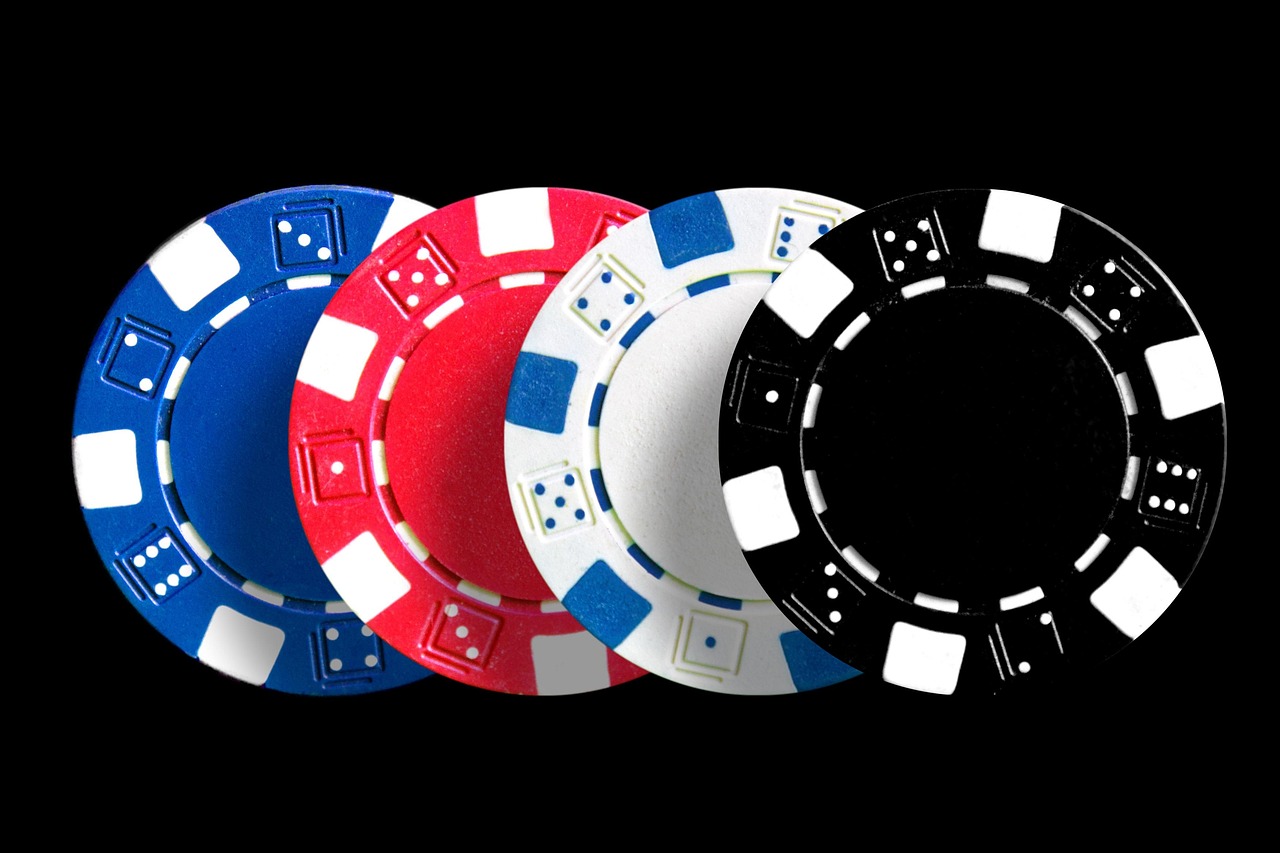
You spin for twenty minutes, hit nothing but dead spins, then watch a streamer on YouTube land a 5,000x multiplier on the same slot in under a hundred spins. Is that streamer lucky, or is something else going on? Mostly, it's the math. Every slot you play has a personality baked into its code, and that personality is called volatility. Understand it, and you stop feeling cheated by the machine — and start choosing games that actually fit how you like to play.
What Volatility Actually Means (Beyond the Buzzword)
Volatility, sometimes called variance, describes how a slot distributes its payouts over time. A low-volatility slot pays small amounts frequently. A high-volatility slot pays rarely, but when it does, the amounts can be huge. Both types can have the same RTP — typically between 94% and 97% on modern titles — so volatility is not about how much the casino keeps. It's about the rhythm of the ride.
Think of it like two lottery-style games at a fair. One costs $1 and hands out a $2 prize every third ticket. The other costs $1 and hands out $500 once every thousand tickets. Same expected return. Completely different experiences. Slots work the same way.
Here's a rough breakdown you'll see across the industry: Many readers start with tylenhacai.org.mx when comparing options.
- Low volatility: hit frequency around 30-45%, typical wins 0.5x to 3x your bet
- Medium volatility: hit frequency roughly 20-30%, wins often 5x to 20x
- High volatility: hit frequency under 20%, wins can reach 1,000x to 50,000x or more
Those numbers matter more than any theme, animation or bonus feature when you're deciding where to park your bankroll for an hour.
The Psychology Trap: Why High Volatility Feels Broken
High-volatility slots are designed to trigger something called variable ratio reinforcement — the same psychological mechanism that makes scratch cards and loot boxes so addictive. You don't know when the reward comes, and that uncertainty keeps you pulling the lever. The problem is that a 10,000x max win advertised on the loading screen might have a probability of 1 in 5 million spins. You are not "due" for it because you've been losing. Each spin is independent.
I've watched players burn through a $200 bankroll on a high-volatility slot in twelve minutes, convinced the bonus was "coming." It wasn't coming. It was just mathematically unlikely within that session. Meanwhile, someone on a low-volatility slot with the same $200 might still be playing an hour later, enjoying a slow bleed or a small profit. Neither player is smarter — they just chose different variance profiles.
How to Match Volatility to Your Bankroll
This is where most players get it wrong. They pick a slot because the graphics look cool, then wonder why their $50 deposit vanished in ninety seconds.
A practical rule of thumb:
- Decide your session budget first — say $100.
- Pick a bet size that gives you at least 200 spins. That's $0.50 per spin on a $100 budget.
- If you choose high volatility, drop to 300+ spins of runway, because you'll need to survive long dry spells.
- If you choose low volatility, 150-200 spins is usually enough to see the payout rhythm.
For a $50 budget, high-volatility slots at $0.50 per spin give you just 100 spins. That is dangerously thin. One cold streak and you're done before the bonus feature even has a chance to land. Scale down to $0.20 per spin, or switch to a medium-volatility title.
Volatility Isn't Just About Slots
The same principle runs through every corner of iGaming. In poker, cash games are essentially low volatility — many small pots, steady grind. Multi-table tournaments are high volatility: you might play for four hours and bubble out with nothing, or turn a $22 buy-in into $4,000. Skilled tournament players accept the variance because the expected value is there over hundreds of events.
In sports betting, a straight single on a heavy favorite is low volatility. A ten-leg accumulator at 500/1 is extreme volatility. The bookmaker's margin is roughly the same either way — but the accumulator will lose far more often, which is exactly why it pays so much when it hits.
Even live dealer games follow the pattern. Baccarat's banker bet is about as low-volatility as casino games get. A straight-up number on roulette is the opposite end of the spectrum, paying 35-to-1 with a 2.7% house edge on a single-zero wheel.
Reading Volatility Without Guessing
You don't need to trust marketing copy that says "mega wins." Check the actual data:
- Max win cap: Slots with a 5,000x cap or higher are almost always high volatility.
- RTP and hit frequency: Some providers publish both in the game info panel. Low hit frequency plus high max win equals high volatility.
- Bonus buy cost: If a feature buy costs 100x your bet, the slot is high volatility. If it costs 40x to 60x, it's usually medium.
- Provider reputation: Studios like Nolimit City and Hacksaw Gaming lean heavily into extreme volatility. Pragmatic Play spans the range — Gates of Olympus is high, while many of its classic fruit slots are medium.
Once you start checking these signals, you'll never blindly pick a slot again.
The Bottom Line on Variance
There's no "best" volatility — only the right fit for your bankroll, your patience and your reason for playing. If you want long sessions and steady entertainment, low to medium volatility keeps you in the chair. If you're chasing a life-changing hit and can genuinely afford the swings, high volatility gives you that shot, at a price. What kills bankrolls isn't volatility itself. It's playing the wrong volatility with money you needed for something else. Pick your slot the way you'd pick a seat at a poker table — based on how deep your stack actually is, not how deep you wish it were.

Joeby Ragpa
This template is so awesome. I didn’t expect so many features inside. E-commerce pages are very useful, you can launch your online store in few seconds. I will rate 5 stars.
ReplyAlexander Samokhin
This template is so awesome. I didn’t expect so many features inside. E-commerce pages are very useful, you can launch your online store in few seconds. I will rate 5 stars.
ReplyChris Root
This template is so awesome. I didn’t expect so many features inside. E-commerce pages are very useful, you can launch your online store in few seconds. I will rate 5 stars.
Reply