
How Coastal Sand Dunes Form Along British Shores

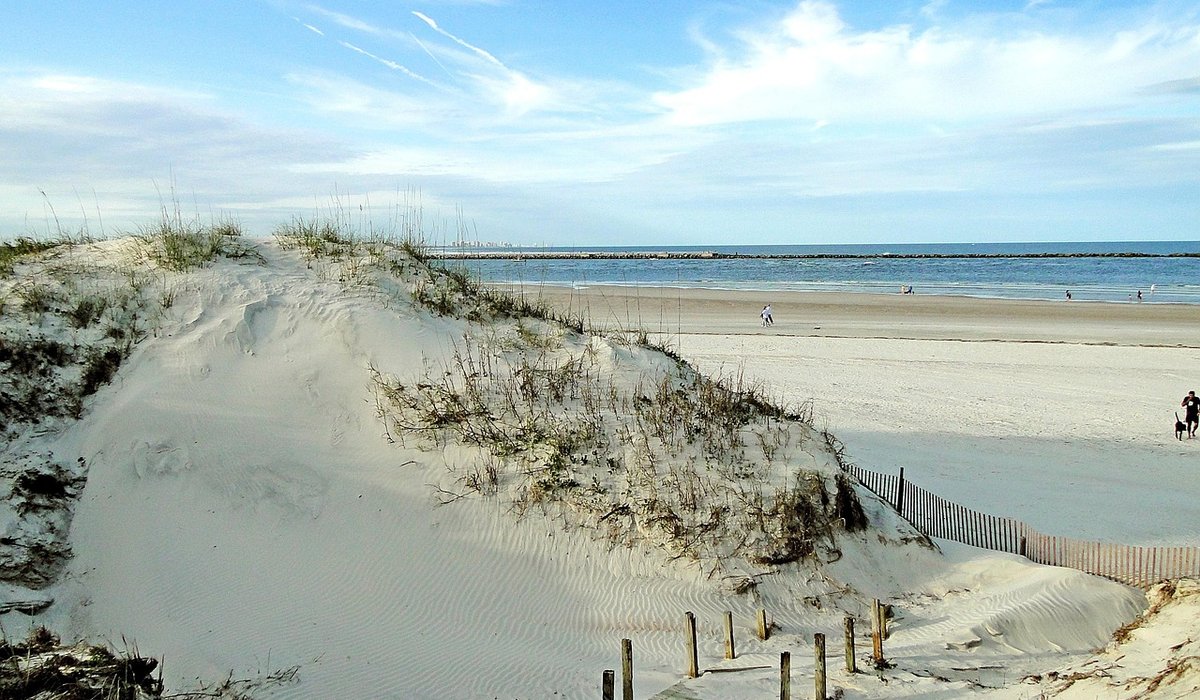
Wind, tide and marram grass: three quiet forces that have been building Britain's coastal dunes since the last ice age retreated. Walk along almost any sandy shore — the Norfolk coast, the Sefton coast, the Welsh estuaries, the links of eastern Scotland — and you are crossing a landscape still under construction, shifting a few grains at a time with every gust.
The Raw Materials: Sand, Wind and a Falling Tide
Dunes begin with an accident of geography. They need three things at once: a good supply of sand, a wide beach that dries at low tide, and an onshore wind strong enough to lift the grains. Sand arrives from eroding cliffs, river mouths, offshore banks and the crushed shells of marine creatures, and it settles where the tidal range is generous enough to leave a broad drying apron twice a day.
Once dry, sand starts to move. Grains between roughly 0.2 and 0.5 millimetres are light enough to hop along the surface — a process called saltation — when the wind near the ground reaches about 15 to 20 kilometres per hour. Those grains tumble up the beach until something interrupts them: a line of seaweed, a piece of driftwood, a shingle ridge, a clump of sea sandwort. Sand gathers behind the obstacle, and an embryo dune is born.
Marram Grass: The Engineer of the Dunes
Obstacles alone would never hold a dune together. That work falls to marram grass, whose roots and rhizomes reach more than a metre down and knit loose sand into something stable. More remarkably, marram tolerates being buried. On a growing dune it pushes upward through fresh layers of sand at up to a metre a year, trapping more as it climbs. Its long, wiry leaves bend in strong wind rather than snapping, slowing the airflow and dropping sand at the plant's feet.
On the more exposed shores of eastern England and Scotland, lyme grass and sea couch often work alongside it. Together these plants turn a shifting heap into a foredune ridge — the first line of defence against the sea.
From Embryo Dune to Mature Slack
Give a dune system a few decades and it develops a distinct geography, with a distinct set of plants and animals for each zone:
- Embryo and foredunes — the young, mobile front ridge, low in nutrients and rich in shell fragments.
- Yellow dunes — the classic marram-covered ridges, still growing and shifting, named for the bare sand between the tussocks.
- Grey dunes — older and fixed, with mosses, lichens and a skin of turf. As nitrogen builds up, acid grassland, heath and scrub move in.
- Dune slacks — damp hollows between ridges where the water table meets the surface, home to orchids, marsh helleborine and, in a few places, the natterjack toad.
Britain holds a substantial share of north-west Europe's dune habitat, and complexes such as Braunton Burrows, Sandwich Bay and the Sefton coast are recognised internationally. They take centuries to build and can be lost in a single winter of storms, which is why grazing by rabbits and, on some sites, conservation herds matters so much: it keeps the turf open and the sand moving.
Why Dune Systems Matter to Seaside Communities
Dunes are flood defence that works with the sea rather than against it. A healthy dune absorbs wave energy, releases sand back onto the beach during storms and gives the shoreline room to move. Where dunes have been damaged, grazed bare or built over, erosion speeds up and flood risk climbs. After the storms of 2013–14, stretches with intact dune systems recovered within a few seasons; those without them did not.
Dunes also store fresh water, shelter rare insects and lizards, and are a large part of what makes a British seaside holiday feel like itself.
How to Enjoy Dunes Without Damaging Them
- Use boardwalks and marked paths — the vegetation holding dune sand together breaks underfoot very easily.
- Avoid the steep seaward faces. A few people sliding down can undo a season's growth.
- Keep dogs on leads between April and August, when ground-nesting birds and young reptiles are most vulnerable.
- Leave driftwood, seaweed and strandlines where they lie; they are the beginnings of the next generation of dunes.
- No fires or disposable barbecues, and take every piece of litter home — hot metal and glass are lethal in dry marram.
Small Habits for Sustainable Seaside Living
Looking after dunes is mostly a matter of small, repeatable choices. Join a beach clean or a local conservation group; many dune sites rely on volunteers for path repairs and litter lifts. Walk or cycle to the shore where you can, buy from nearby shops, and cut back on single-use plastic, which so often ends up tangled in the strandline.
Keep to the paths even when the sand looks firm and empty, and resist the urge to pick flowers or collect shells from a protected site. If you notice erosion, fly-tipping or damage, tell the local authority or the site's rangers — they would far rather hear about it early.
Dunes are not fixed scenery. They are a working partnership between wind, tide and plants, and they hold only for as long as we tread lightly and let them get on with it.

Joeby Ragpa
This template is so awesome. I didn’t expect so many features inside. E-commerce pages are very useful, you can launch your online store in few seconds. I will rate 5 stars.
ReplyAlexander Samokhin
This template is so awesome. I didn’t expect so many features inside. E-commerce pages are very useful, you can launch your online store in few seconds. I will rate 5 stars.
ReplyChris Root
This template is so awesome. I didn’t expect so many features inside. E-commerce pages are very useful, you can launch your online store in few seconds. I will rate 5 stars.
Reply