
Understanding Tide Times Before You Swim

Why the Sea Never Stands Still
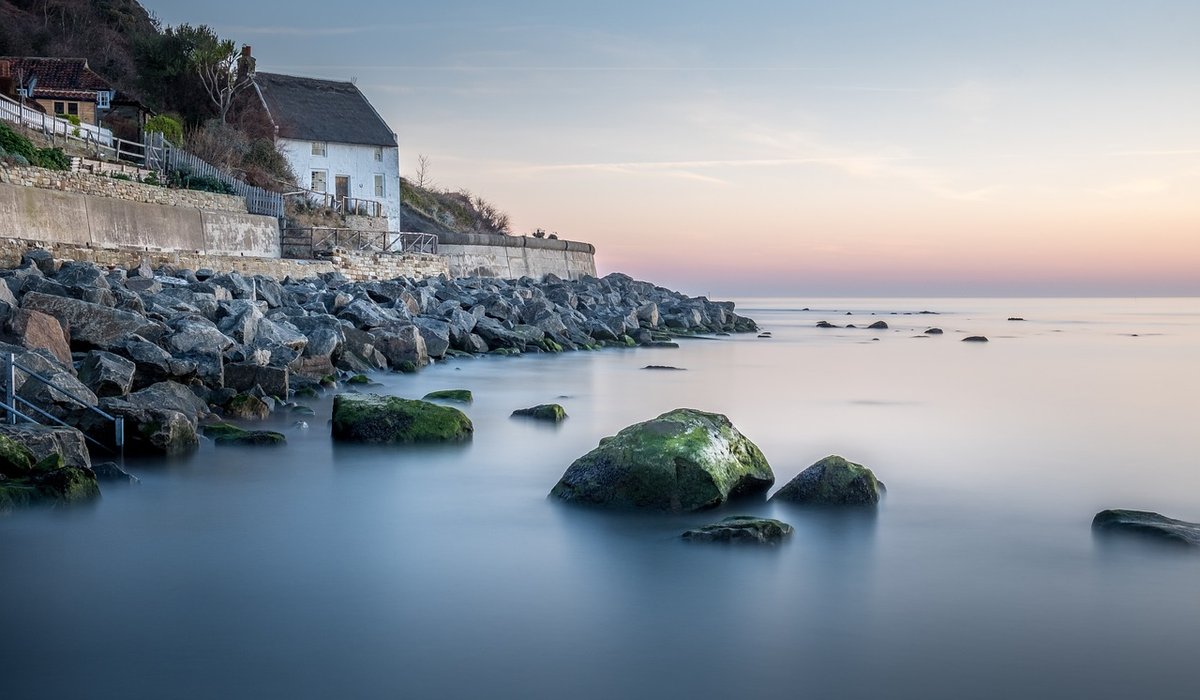
There is a particular quiet on a British beach in the hour before low water. The sand stretches out, the waves soften, and the whole shoreline seems to be holding its breath. Then the sea begins to return — and on some stretches of our coast it returns at a walking pace, while on others it moves faster than most people can swim. Knowing your tide times is not seaside trivia. It is the single most useful piece of knowledge you can carry to the water's edge.
Tides are driven mainly by the gravitational pull of the moon, with a helping hand from the sun. Around the UK, most coasts see two high waters and two low waters roughly every 24 hours and 50 minutes, which is why the tide arrives about fifty minutes later each day. Spring tides — nothing to do with the season — fall around the new and full moon and bring the biggest range. Neap tides bring the smallest. The difference matters enormously: the Bristol Channel can see a range of over twelve metres, while some sheltered stretches of the Solent see barely two.
How to Read a Tide Table Properly
Tide tables are free, widely published and surprisingly easy once you know the shorthand. HW is high water, LW is low water, and the figure beside each is the predicted height in metres above chart datum. Look for the times first, then the heights.
- Check the table for the exact beach or harbour you plan to visit, not the nearest big town. Tides vary over surprisingly short distances.
- Note whether the range is large or small. A one-metre range means a gentle, forgiving tide; a seven-metre range means the water moves with real purpose.
- Remember the rule of twelfths. Over roughly six hours, the tide rises one twelfth in the first hour, two in the second, three in the third, three in the fourth, two in the fifth and one in the sixth. The middle hours are the fastest, and that is exactly when people get caught out.
- Add wind to the equation. A stiff onshore breeze can push water in faster and higher than the table predicts.
The Places Where Tides Catch People Out
Most coastal incidents do not happen on open, gently shelving sand. They happen at the features that funnel and accelerate water.
River mouths and estuaries are the classic trap. Fresh water meets salt water, sandbanks shift with every tide, and the incoming sea can fill a channel behind you while you are still paddling in what looked like a shallow pool. Estuarine currents are strong, often cold, and rarely run in the direction you expect.
Headlands and rocky points are the other great offender. Tidal streams can run at several knots around a headland, and a swimmer who is comfortable in a sheltered bay may find themselves being carried past the point rather than back to the beach. Add a swelling sea and the effect multiplies.
Other spots to treat with respect include long sandbanks that dry at low water, causeways that flood from both ends, and any beach where the seabed drops away steeply close to shore. If you are ever unsure, ask a local lifeguard or harbour master — they know the water in ways no table can capture.
Timing Your Swim with the Tide
The safest and most enjoyable swims are usually planned around a rising tide approaching high water. The water is at its deepest, the beach is at its most predictable, and you have a clear window before it starts to fall again.
- Swim on a rising tide or around slack water, and aim to be out well before the tide turns.
- Avoid the two hours either side of low water near estuaries, where mud and channels are exposed and the returning tide can cut off your route back.
- Tell someone where you are going and when you expect to be back, and carry a phone in a waterproof pouch.
- Never swim alone in an unfamiliar spot, and never turn your back on the sea for long.
Leaving the Coast Better Than You Found It
Understanding tides is part of a wider habit: treating the coast as a place we borrow rather than own. A few small choices make a real difference.
- Take every piece of litter home, including the bits that are not yours. Plastic on the strandline is on its way into the food chain.
- Keep a respectful distance from seals, seabirds and their young. If an animal reacts to your presence, you are already too close.
- Leave rocks and seaweed where they lie. Rock pools are fragile habitats, and turning a stone over is a small eviction.
- Use marked paths on dunes — the marram grass holding them together takes years to recover from a single shortcut.
Check the table, read the beach, and give the water the respect it has earned. Do that, and the seaside will keep rewarding you for years to come.

Joeby Ragpa
This template is so awesome. I didn’t expect so many features inside. E-commerce pages are very useful, you can launch your online store in few seconds. I will rate 5 stars.
ReplyAlexander Samokhin
This template is so awesome. I didn’t expect so many features inside. E-commerce pages are very useful, you can launch your online store in few seconds. I will rate 5 stars.
ReplyChris Root
This template is so awesome. I didn’t expect so many features inside. E-commerce pages are very useful, you can launch your online store in few seconds. I will rate 5 stars.
Reply